Addressing Human Trafficking in Burundi

Burundi is a landlocked East African country bordering Tanzania and Rwanda. The majority of its population faces extreme poverty, with 65% of Burundians falling below the poverty line. In Bujumbura, the country’s capital, agricultural workers earn an average wage of 3,000 francs ($1.82) per day. In rural areas, the minimum wage is a third of the capital city’s, forcing rural workers to make ends meet on less than a dollar a day. Many Burundians lack access to clean water and basic sanitation and less than 5% have electricity. In addition to a high rate of extreme poverty, political instability and widespread violence have led to an increase in human trafficking in Burundi.

Trafficking in Supply Chains and “Cash Crops”

The Education Policy Data Center found that, as of 2014, 62% of Burundians aged 15-24 never complete primary education. Child labour is common, especially in agriculture. The International Labour Organization (ILO) and the Government of Burundi found, in a collaborative study, that child labour was commonly used to harvest “cash crops” such as coffee. Forced labour also occurs, sometimes because of human trafficking.

Gold mining is another Burundian industry plagued by human trafficking. According to the U.S. State Department, children and young adults often fall victim to forced labour in the gold mines surrounding the city of Cibitoke. The U.S. State Department also finds that traffickers try to recruit people they know into forced labour.

Children are the most common victims since they are easier to mislead and exploit for monetary gain. Burundi’s primary catalysts for human trafficking are its major industries. Implementing anti-trafficking protocols within these industries and refusing to buy exports produced using forced labour and trafficking would go a long way toward ending human trafficking in Burundi.

The Impact of Human Trafficking on Burundian Families

Young women and children are especially vulnerable to human trafficking. Many leave their families because of traffickers’ false promises of “good jobs,” which women and children see as their only chance to escape poverty. Human trafficking also causes emotional trauma for families with members who have been trafficked. NGOs working in the area believe that between 500 and 3,000 young women from Burundi became trafficking victims in the Middle East between 2015 and 2016.

OLCT, a Burundian NGO that stops transnational crime, reported that at least 527 girls and women arrived in Middle Eastern countries in 2017 as a result of human trafficking. Additionally, more than 250 girls and women arrived in the Middle East in 2018. According to the chairman of OLCT, Qatar is the most common place internationally trafficked Burundian girls end up in due to preparations for the 2022 World Cup.

Human trafficking in Burundi and the exploitation of young girls for monetary gain is a major problem in Burundi. However, ending human trafficking is possible with the proper prevention programs. Burundians stand to benefit both emotionally and economically from greater support from both the African and international communities in preventing human trafficking and keeping families together.

Ending Human Trafficking in Burundi

In April 2021, the Ugandan police intercepted a human trafficking caravan in transit to another nation. The police saved 29 Burundian girls and arrested and charged five human trafficking racket suspects. According to a Ugandan police spokesperson, the girls’ destination was likely the sex trade. Uganda is a transit country for traffickers bringing girls into other countries. Human trafficking in Burundi and Africa as a whole will end only if bordering nations cooperate with each other. Uganda’s rescue of 29 young girls displays what can happen when nations work together.

The Burundi Counter-Trafficking Project

Gaston Sindimwo, the vice president of Burundi as of 2019, says that fighting human trafficking requires universal respect for human rights and the understanding that human trafficking is a global issue. In 2019, the International Organization for Migration (IOM) partnered with the Burundian Government to launch Burundi Counter-Trafficking, a project to strengthen the government’s capacity to fight human trafficking.

The Netherlands has fully funded the $3 million project, which will run until the end of 2022. Caecilia Wijgers, the Netherlands’ ambassador to Burundi as of 2019, stressed the need to protect people suffering exploitation and deception. Funding from the Netherlands has limited the number of trafficking rackets in the past few years and has allowed Burundi to work with its neighbors to stop trafficking throughout the continent.

The Burundi Counter-Trafficking project is helping reduce human trafficking in Burundi. However, much work still lies ahead in order to end the exploitation of Burundians and ensure no more families suffer as a result of human trafficking.

– Curtis McGonigle

Fostering Recruitment Agencies Ethical Practices

Kenya’s Magical NUMBER (0800222223): Handover

After years of effort, the Kenya government finally emerged a step closure to realizing a major achievement in the rescue and repatriation of trafficked Kenyans in the diaspora. This was made possible through the National Employment Authority (NEA) with support from the International Organization for Migration (IOM) who jointly implemented the “Fostering Recruitment Agencies’ Ethical Practices and Accountability” project as well as supporting the government of Kenya to pilot a recruitment oversight and community feedback mechanism to prevent trafficking in persons. Funded by the US Department of State Office to monitor and combat trafficking in persons, through the Global Fund to End Modern Slavery (GFEMS), the project was implemented from November 2020 to October 2022.

The project which as steered by a technical committee set up by the Minister for Labour and Social Protection in 2020 was officially inaugurated in July 2021. The committee drew membership from a multi-agency government team who incorporated non-state actors. CHTEA was one among three Civil Society Organisations nominated by the Minister to sit at the technical committee.

The oversight mechanism was however established in June 2021, through a collaborative process involving key labour migration stakeholders from Government Ministries, Departments and Agencies (MDAs), non-state actors at National and County levels as well as communities at the grass root level. The Oversight Mechanism and Community Feedback Mechanism will serve to monitor the Kenya Labour Recruitment industry and identify Private Recruitment Agencies operating unethically.

Some of the key achievements accomplished under this project include;

  1. The establishment of a 9-member Advisory Committee and the Multi-Stakeholder Technical Committee to provide technical guidance to the National Employment Authority (NEA) on the operations of the Oversight Mechanism.
  2. The establishment of the Toll-Free Hotline 0800222223.
  3. The development of the distress reporting tool which is accessible through the NEA Information and Management System ( neaims.go.ke.). Through the system, Kenyan migrants in distress can report their cases and those seeking to get a job abroad can get a list of private recruitment agencies registered by the National Employment Authority (NEA).
  4. Over 100 Private Recruitment Agencies (PRAs) were trained using the IOMs International Recruitment Integrity System (IRIS). Out of the 100 trained PRAs, 46 expressed interest to proceed and enroll in the IRIS capacity building program. 17 PRAs are currently enrolled in the IRIS capacity building training, with 2 agencies already undergoing a maturity assessment.

To ensure sustainability and continuous awareness creation at the community level, the project has trained over 250 resource persons on the Oversight and Community Feedback Mechanism in the five pilot counties of Nairobi, Mombasa, Kilifi, Nandi and Busia. This led to the development and dissemination of the key labour migration guidelines and procedures which were translated to Kiswahili language for ease of understanding by the public. These include;

  1. A guide to safe labour migration.
  2. Information guide on the National Employment Authority Information Management System (NEAIMS).
  3. Regulations on the Private Recruitment Agencies and key sections of the labour institutions Act, 2007.

Additionally, as an exit strategy, the 22-member multi-Stakeholder committee on the oversight and community feedback mechanism held a technical committee meeting on the 23rd of September 2022 to review their terms of Reference (TORs) towards the establishment of sub-committees as per the agreed thematic areas which include;

  1. Migration Governance and Compliance.
  2. Capacity Building and Outreach.
  3. Monitoring, Evaluation and Learning.
  4. Media publicity and Advocacy.

The sub-committees will be composed of at least 5 members and shall report to the larger committee. The Ministry of Labour, NEA and IOM will act as secretariat to the sub-committees and the meetings will be held once per month before the technical advisory committee meetings or as per need basis.

To mark the closure of this project, IOM in collaboration with NEA, organized a one-day closing workshop on Tuesday 11th October 2022 at the Crown Plaza Hotel.  In attendance were key labour migration stakeholders from Government, Departments and Agencies (MDAs), members of the Multi-Stakeholder Technical Committee and representatives from the Civil Society Organizations (CSOs) and the Private Recruitment Agencies (PRAs).


Prioritizing Mental Health in Human Trafficking

Human trafficking is a global challenge, with an estimated 50 million people exploited in the Asia-Pacific region, in Africa, in Latin America and the Caribbean, in central and south-eastern Europe, in the European Union and developed economies, and in the growing informal labour market in  Middle East (International Labour Office, 2022).  Trafficking in Persons is a human rights violation that occurs around the world. Many survivors of trafficking have mental health problems, specifically symptoms of anxiety, depression and Post Traumatic Stress Disorder (PTSD).  A study on mental health that was carried out with women in Nepal who were trafficked for sex work and various forms of labor (n=164) found that sexually exploited women reported higher levels of anxiety, depression and PTSD than did women exploited for other purposes.

One of the main programs and initiatives through which CHTEA responds to the emerging human trafficking dynamic in Kenya is through; Rescue, Rehabilitation, Return and Re-integration of victims/survivors of trafficking (VOTs). CHTEA has a Liaison Officer based at Beirut, Lebanon and covers the larger Gulf Region. The Officer also manages a small rescue facility based at Beirut as she seeks to work with like-minded organizations to seek shelter services for VOTs and also raise funds to facilitate their travel tickets back to Kenya.

Upon arrival in Kenya, the survivors/victims are received at the airport by CHTEA Nairobi staff upon which they are taken through an assessment. Some of them are referred to the shelter/safe house (managed by CHTEA) for medical and psycho-social support. Some of the survivors usually arrive in very bad states of mind and some may not even recognize their family members. It’s very disheartening that the victims suffer extremely traumatizing experiences that make some of them end up developing long term mental disorders.

Case study

During one of the routine pick-ups from the airport in early July 2022, family members and CHTEA staff received one, Betty (not her real name) who suffered from extreme Post Traumatic Stress Disorder (PTSD). She was mentally unstable. Betty had traveled to Nairobi from Lebanon in the company of another two survivors who acted as Betty’s minders. “When you called us at Addis airport, we had lost track of Betty and we had to report to the airport security in order to help us locate her since our connecting flight was delayed by 2 hours”, said Agnes (not her real name), one of the returnee minders. When the group finally arrived at Nairobi airport, Betty was again lost at the baggage area waiting to identify her suitcase. Even though the flight arrived at 1.00pm,

Betty had not come out of the airport precincts 4 hours later. Eventually, the waiting team got concerned and after enquiring from the airport customer care desk, an officer retorted that, “there is a mentally unstable lady detained by the security inside at the check-out office.” Betty’s sister and CHTEA staff approached the security desk and explained that the detained lady was indeed a sister to Ruth. Betty was shortly escorted out to the delight of the waiting Ruth (sister). She was warmly received by the entire team and escorted to have a cup of coffee at a nearby restaurant. Even though Betty could not believe that she was in Kenya, she could be seen gazing around in amazement.

After going through a brief screening interview by a CHTEA staff, it was discovered that Betty was suffering from a mental health breakdown and that she could hardly comprehend what was happening. Inadvertently, Betty would describe her experience in Lebanon as a great saying that she was treated very nicely and even given off-days (which was not the case).

Ruth’s family requested to take her home despite the advice given that she could be referred to the shelter for medical and psychosocial support. The family pledged to ensure that she received instant care for both her medical/mental and psychosocial needs. A follow up schedule was agreed with the family – 4 to 5 monitoring visits were made to the family to check out on Betty’s recovery path. She made great strides in improvement.

Although traumatic experience while being trafficked may induce or exacerbate mental disorders, poor mental health may also increase vulnerability to trafficked victims in the context of weak decision-making capacity and increased dependency on others. Trafficked individuals’ risk of mental disorder appears to be influenced by multiple factors, including pre-trafficking abuse; duration of exploitation; violence and restrictions on movement while being trafficked. Others include greater volumes of unmet needs and lower levels of social support following trafficking.

In conclusion, mental health problems are prevalent among trafficked people while survivors often require support to recover from the psychological impact of their experiences. Mental health professionals have a key role to play in responding to human trafficking. Awareness raising and training are required to ensure professionals are prepared to respond to trafficking and to safely identify and refer trafficked people to the care that they need and deserve.

CHTEA has a clear referral pathway beginning with individual assessments (to identify needs) which then leads to the design of a care plan which incorporates the array of professionals needed to provide the desired services. Such include psychiatrists, psycho-social therapists, hospitals, social workers (for family reintegration programmes), sociologists and internal administrators who coordinate service delivery and logistics. In situations where legal serviced are required, CHTEA has collaborative frameworks with among others “Kituo Cha Sheria”, a pro-bono legal NGO, FIDA Kenya, the Coalition on Violence Against Women, among others. In case a trafficker is to be arrested or in matters of investigation, CHTEA works closely with the Transnational Organized Crime Unit (TOCU) and the Anti Human Trafficking and Child Protection Unit (AHTCPU); both of which are within the jurisdiction of the Directorate of Criminal Investigations.

Human Trafficking: Eye on South Sudan

The Republic of South Sudan is a nation within the East African Community and is always least reported on matters human trafficking. This is arguably partly due to the prolonged internal strife, longstanding conflict and instability. As a result, conflict-related, sexually violent crimes throughout the country have had an unwavering presence while human trafficking in South Sudan is also prevalent. The United Nations Mission in South Sudan (UNMISS) documented 224 cases of sexual violence , 19 men, 66 girls and six boys in 2019 according to the Conflict-Related Sexual Violence Report of the United Nations Secretary-General.

Against a backdrop of conflict, related governance challenges and mixed migration, including forced displacement and transit migration, corroborated reports and anecdotes suggest that the following forms of internal and transnational trafficking in persons (TiP) are perpetrated in South Sudan: forced recruitment by armed forces and armed groups, forced marriage, domestic servitude, sexual exploitation, and labour exploitation.

South Sudan has yet to make significant progress in eliminating the human trafficking problem that threatens the country. This has caused the nation to remain in the Tier 3 category according to the United States Department of State’s Trafficking in Persons report for 2021. Countries that fall within the Tier 3 category risk possible restrictions and the loss of U.S. assistance. The following are some facts about human trafficking in South Sudan that can help motivate action, as well as raise awareness of the threats and dangers that so many throughout the country experience:

  1. Women are the key targets: Traffickers most frequently sexually exploit women in South Sudan’s capital–Juba–as well as Nimule, a city in the country that borders Uganda. Besides this reality, women and girls are more vulnerable to domestic servitude throughout the country and outside the borders. It is not uncommon for male occupants of the household to sexually abuse the women of the house or force them to engage in commercial sex acts.
  2. Both internal and foreign victims are at risk of human traffickers exploiting them in South Sudan. Organized networks of traffickers cut across North, Central and East Africa and leave East African migrants and those transiting through South Sudan vulnerable to abduction, sex trafficking and forced labour.
  3. Unaccompanied or orphaned children experience an increased risk of trafficking and other forms of sexual exploitation. For example, unaccompanied minors in refugee camps or internally displaced children are particularly in danger of traffickers abducting them.
  4. Some factors prevent victims from reporting traffickers. Internal factors such as social stigma and fear of punishment can often discourage victims of trafficking from reporting the crimes and transgressions that traffickers committed against them to the government’s law enforcement officers.
  5. South Sudan thus far has had limited success in implementing proper strategies to address the dangers of human trafficking. Increasing the rule of law and ensuring that investigations translate into arrests and prosecutions is just one step the government must take to eliminate its trafficking problem. As the Conflict-Related Sexual Violence Report of the United Nations Secretary-General noted, “Strengthening the capacity of national rule of law institutions is critical in order to advance credible and inclusive accountability processes for past crimes, as well as for prevention and deterrence of future crimes.”

With support from the United Nations Mission in South Sudan, over 700 officers of the South Sudan People’s Defence Forces, as well as 150 SPLA-IO/RM (the pro-Riek Machar Sudan People’s Liberation Army in Opposition) officers, received training focused on legal frameworks prohibiting the use of sexual violence. The SPLA-IO/RM also issued four command orders, with one of these orders instructing its commanders to form committees to investigate cases of sexual violence.

UNMISS continues to work with local commanders to encourage the release and referral of abducted women and children to appropriate support structures. Political advocacy is persistent and ongoing to secure the release of all female and child trafficking victims and reduce human trafficking in South Sudan.

Involvement of senior Government Officials

On March 25, 2022, a senior official at the South Sudan Embassy was being investigated, over suspected links to child trafficking. The official was probed alongside a brother to a South Sudan Minister for Humanitarian Affairs, Peter Mayen Majondit. Police identified the brother as Santos Machok Majong. This was after detectives rescued fourteen South Sudanese children from an apartment at Kilimani area, Nairobi.

The alleged trafficked children were being moved from one apartment to the other, to avoid raising eyebrows. At some point, the children were believed to have been held at an apartment near Rusinga School, at Lavington Green, Nairobi. It was even claimed that the children were being moved around using diplomatic vehicles.

It was not until DCI detectives from the Child Protection Unit raided Marcus Garvey Apartment at Kilimani, that the children were rescued.

The rescued children consisted of seven girls and seven boys and they were all under the age of 15. A woman, whose identity was not immediately established, and believed to be the caregiver, was also arrested. Upon rescue, the children were taken to a Children Rescue Centre as police continued with investigations.

Commemoration of the International Day Against Trafficking in Persons

This year’s National commemoration of the international day against trafficking in persons in Kenya took place at Nairobi’s Eastlands surbarb or Huruma. The choice of Huruma as a national focus for the event was symbolic of the challenging environment faced by densely populated and impoverished areas of the urban setting, the world over.

In collaboration with the Counter Trafficking in Persons (CTIP) Secretariat through the Ministry of Public Service and Social Protection and in conjunction with the Advisory Committee, CHTEA spearheaded the coordination, presentation by survivors and the participatory process of the event.

The chief guest at the event was the Chair of the Advisory Committee. A key not speech was read by a representative of the Cabinet Secretary. Other key dignitaries included representatives from the International Organization for Migration (IOM), the Religious Against Human Trafficking (RAHT), the Kenya National Commission on Human Rights and other Civil Society Organizations.

From a cross-section of the public feedback, those present affirmed that human trafficking was a reality and more prevalent within the informal settlements of the urban settings and the rural areas of Kenya. In a participatory way, the public feedback demonstrated deep understanding of the human trafficking dynamic and especially among the young population; mainly of female gender.

The 2022 Global theme was the “Use and Abuse of Technology”. Three survivors were at hand to demonstrate how technology was use and abused before, during and after their ordeals. They recounted how recruitment was perpetuated during the Covid advent by the use of technology………..use of phones, emails, online advertisement of jobs and pornographic sites, among other ways.

Below is a pictorial presentation of the day’s proceedings:

Group photo taken during the National Commemoration of the World Day Against Human Trafficking in Kenya. Stakeholders present included representatives from Counter Trafficking in Persons (CTIP) Secretariat, the Advisory Committee, International Organisation for Migration (IOM), Religious Against Human Trafficking (RAHT), Kenya National Commission on Human Rights, and various other institutions.

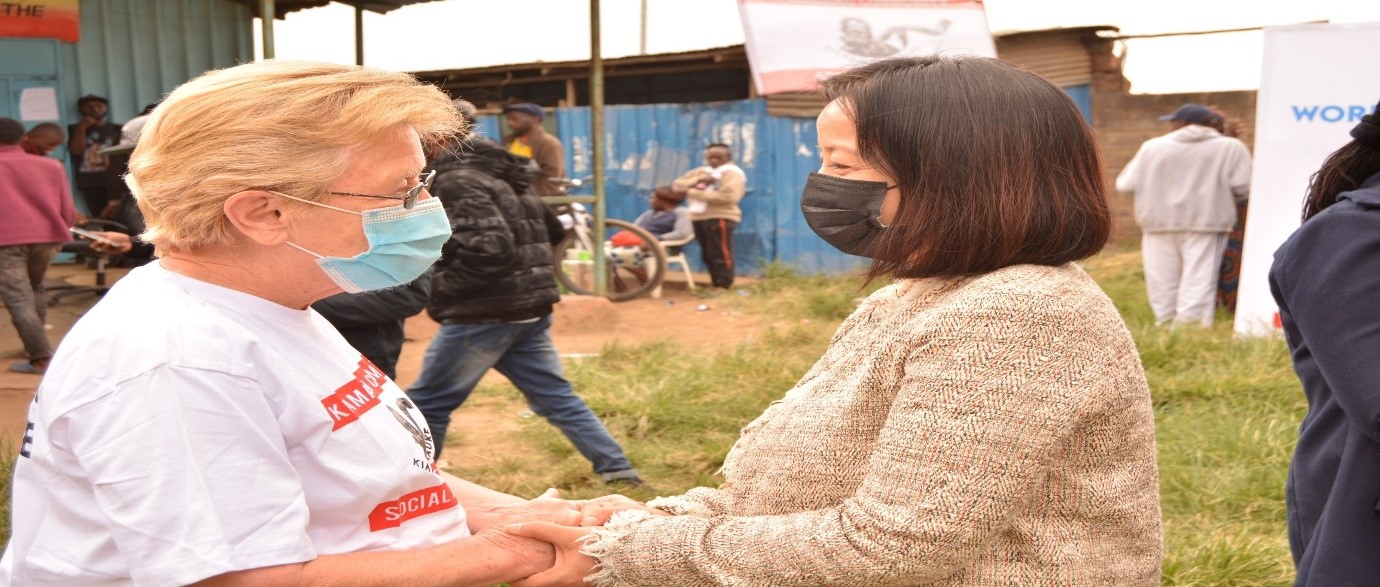
CHTEA Executive Patron, Sr. Mary O’Malley (left) during a conversation with Ms. Pravina Gurung, Programme Manager, IOM Kenya on the sidelines of the event.


One of the participants sharing their story about human trafficking during the commemoration of the World Day Against Human Trafficking Huruma grounds, Nairobi.

New Release: 2022 Global Estimates of Modern Slavery (Human Trafficking)

The International Labour Organization (ILO), Walk Free and the International Organization for Migration (IOM) released the 2021 Global and Regional Estimates report. The estimates indicate that there are 50 million people living in situations of modern slavery on any given day, either forced to work against their will or in a marriage that they were forced into. This number translates to nearly one of every 150 people in the world. Through the adoption of the Sustainable Development Goals (SDGs), the global community has committed to ending modern slavery among children by 2025, and universally by 2030.

The ongoing COVID-19 pandemic has heightened the risk of modern slavery and made the road to the 2025 and 2030 target dates an even more difficult one. The principal sources of data are from nationally representative household surveys – 68 forced labor surveys and 75 forced marriage surveys – jointly conducted by ILO and Walk Free, as well as the Counter Trafficking Data Collaborative (CTDC) anonymized case data set on victims of trafficking collected by IOM and its partners.

According to the report, Modern slavery refers to situations of exploitation that a person cannot refuse or leave because of threats, violence, deception, abuse of power or other forms of coercion. It comprises of two principal components – forced labour and forced marriage. The 2021 Global Estimates indicates that 49.6 million people are living in situations of modern slavery on any given day, either forced to work against their will or in a marriage that they were forced into. Forced labour accounts for 27.6 million of those in modern slavery and forced marriage for 22 million.

Forced labour as set out in the ILO Forced Labor Convention, 1930, refers to “all work or service which is exacted from any person under the menace of any penalty and for which the said person has not offered himself voluntarily.” Women and girls make up 11.8 million of the total in forced labour. More than 3.3 million of all those in forced labor are children. A simple comparison with the 2016 global estimates indicates an increase of 2.7 million in the number of people in forced labour between 2016 and 2021. The initial months of the COVID-19 pandemic were accompanied by widespread reports of forced labour linked to the crisis.

Forced labor is highest in the Arab states at 5.3 per thousand people, compared to 4.4 per thousand in Europe and Central Asia, 3.5 per thousand in both America, Asia and Pacific regions and 2.9 per thousand in Africa. It is reported that 86% of all forced labour is imposed by private agents – 63% in forced labour and 23% in forced commercial sexual exploitation. State imposed forced labour accounts for the remaining 14% of people in forced labour. The initial months of the COVID-19 pandemic were accompanied by widespread reports of forced labour linked to the crisis. More than half of all forced labour occurs in either upper- middle income or high-income countries. People in forced labour are subjected to multiple forms of coercion to compel them to work against their will. Women in forced labour are much more likely than their male counterparts to be in domestic work. Migrant workers face a higher risk of forced labour than other workers. An estimated 6.3 million people are in situations of forced commercial sexual exploitation on any given day. This number includes 1.7 million children in commercial sexual exploitation. Over half of all children in forced labour are in commercial sexual exploitation. It is reported that 3.9 million people were in state-imposed forced labour at any point in time in 2021.

Forced marriage refers to situations where a person has been forced to marry without their consent. As set out in the joint general recommendations of the UN’s committee and the Committee on Rights of the Child (CRC), child marriage is considered a form of forced marriage.  An estimated 22 million people were living in forced marriage on any given day in 2021. Women and girls make up 14.9 million of this total. This is a 6.6 million increase in the number of people living in a forced marriage between 2016 and 2021. Nearly two-thirds of all forced marriages, an estimated 14.2 million, are in Asia and the Pacific. This is followed by 14.5 % in Africa (3.2 million) and 10.4 % in Europe and Central Asia (2.3 million). Women and girls subjected to forced marriage account for 14.9 million. Three in every five people in a forced marriage are in lower-middle income countries. It was noted that family members were responsible for the vast majority of forced marriages. Half of those living in forced marriages were coerced using emotional threats or verbal abuse. The report indicates that once they were forced to marry, there is a greater risk of sexual exploitation, violence and domestic servitude and other forms of forced labour.

It was noted that COVID-19 has exacerbated the underlying drivers of all forms of modern slavery including forced marriage.

In conclusion, some of the key policy priorities recommended for addressing forced labour and forced marriage in the lead up to the 2030 target date for ending modern slavery were mentioned as follows:

  • Respect for the freedom of workers to associate and to bargain collectively is indispensable to a world free from forced labour.
  • Extend social protection, including floors, to all workers and their families.
  • Promote fair and ethical recruitment.
  • Strengthen the reach and capacity of public labour inspectorates.
  • Ensure protection for people freed from forced labour.
  • Ensure access to remedy for people freed from forced labour.
  • Address migrant’s vulnerability to forced labour and trafficking for forced labour.
  • Address children trapped in forced labour.
  • Mitigate the heightened risk of forced labour and trafficking for forced labour in situations of crisis.
  • Legislative and policy responses should have a gendered lens as women and girls are disproportionately.
  • Ensure adequate civil and criminal protections in national legislation.
  • Address underlying social-cultural norms and structures that contribute to forced marriage.
  • Invest in building the agency for women and girls.
  • Protect the rights of those vulnerable to forced marriage and trafficking for forced marriage.
  • Address the vulnerability of migrants, particularly children.

Finally, it was acknowledged that reliable information and statistics on forced labour, forced marriage, and human trafficking are critical to promoting awareness and understanding of the problem, and to inform policy responses.

East African networks gaining more control on the entire trafficking value chain

As the international day for counter trafficking in persons fast approaches, the world is more than ever before confronted by a highly versatile, complex and unpredictable nature of trafficking networks, rings and the larger context of the organized crime syndicates globally.

Recalling a report released in 2020 by the Institute of Security Studies (ISS), the East African human trafficking rings have been on an expansion mission of their operations

During the same year (2020), ninety-six Ugandan women, mostly children and youth, were stopped at Nairobi’s international airport in January en route to the United Arab Emirates (UAE) for work opportunities. The girls, who lacked proper employment papers, were victims of a well-established human trafficking ring in East Africa, headquartered in Kenya and operating under the guise of employment agencies. This wasn’t the first such interception. Almost every month, Kenya’s Directorate of Criminal Investigations reports at least one interception involving victims not only from Uganda but also Burundi, Rwanda and to a lesser extent Tanzania. Most of East Africa’s trafficking takes place in and through Kenya.

Traditionally the value chain of this criminal network has comprised three links. First are regionally based recruitment brokers who ferry people from their respective countries to Kenya. Second are the Kenyan-based links who ‘receive’ the people and act as the country’s employment agencies. They move victims from Kenya to the host country. Third are the counterparts who often pose as foreign employment agencies. They are stationed in the host country and ‘receive’ people sent from Kenya. Recent cases and new research by the ENACT organized crime project suggest a shift in the workings of the trafficking value chain as far as the third ‘link’ is concerned. There is evidence that the trafficking of women and girls from East Africa to the Middle East is now being carried out entirely by East Africans.

The East African countries appear to lack power in negotiations with Middle Eastern countries on trafficking issues. This is because of gaps in their domestic legislation and regional trafficking strategies. Yet other regions that export labour to the Middle East have shown that this can be done. For example, the Philippines has 23 bilateral agreements with seven countries – most of which are in the Middle East. This allows authorities to oversee the protection and safety of workers and prevent them being exploited by trafficking networks and employers in destination countries. The labour export sector makes up a very significant portion of the Philippines gross domestic product, yet it also comes with challenges and is not an economic cure-it-all. East Africa needs to learn from approaches elsewhere that prevent trafficking and protect workers. Until more robust responses are in place, trafficking and exploitation are likely to grow in the region. This perpetuates the vulnerability of poor women and girls and undermines the prospects of labour exportation as a livelihoods option.

The full report can be ACCESSED HERE

The Global Trafficking In Persons (TIP) Report July 2022

The global annual Trafficking in Persons report was released on Tuesday, 19th July (this week) at the U.S. Department of State. As stated in the Secretary of State’s message, “This year’s report is released in the midst of an unprecedented humanitarian crisis. Russia’s senseless continued invasion of Ukraine and its devastating attacks across that country have inflicted unfathomable pain and suffering and forced millions of Ukrainian citizens and others to flee seeking safety. We are deeply concerned about the risks of human trafficking faced by individuals internally displaced by the war, as well as those fleeing Ukraine, an estimated 90 percent of whom are women and children.”
Kateryna Cherepakha, president of La Strada Ukraine, has been honoured as one of six 2022 TIP Report Heroes, alongside Mohammed Tariqul Islam from Bangladesh, Major Mohammad al-Khlaifat from Jordan, Judge Cornelius Wennah from Liberia, Irena Dawid-Olczyk from Poland, and Apinya Tajit from Thailand. Congratulations to all!

During a recent conference in Rome, the Polish deputy Commander of the National Police reported that they had busted a human trafficking ring at the Ukraine-Polish border targeting the fleeing population. “The traffickers had presented themselves as volunteers seeking to help the fleeing children, girls and women, among others”, said the Polish police chief.

Focus on East Africa

The new report provides an updated data on the country specific performance index. The 2022 TIP report further revealed that not all Countries in the East African region are Party to the Protocol to Prevent, Suppress and Punish Trafficking in Persons, Especially Women and Children, supplementing the United Nations Convention against Transnational Organized Crime. These countries included Somalia, South Sudan and Uganda. The report therefore signified the need for the domestication of the Palermo protocol by the States.

Below is an executive summary of the East African country specific reports.

KENYA: TIER 2

The Government of Kenya does not fully meet the minimum standards for the elimination of trafficking but is making significant efforts to do so. The government demonstrated overall increasing efforts compared with the previous reporting period, considering the impact of the COVID-19 pandemic on its anti-trafficking capacity; therefore, Kenya remained on Tier 2. These efforts included investigating more trafficking crimes, prosecuting and convicting significantly more traffickers, and identifying more trafficking victims. The government provided limited services to significantly more victims through partnerships with NGOs and reported dispersing more funds from the National Assistance Trust Fund for Assisting Victims of Trafficking to provide victim protection services and support an NGO-owned shelter.

The government also reported increasing services for victims participating in the criminal justice process, such as the ability to provide written testimonies, to prevent re-traumatization. However, the government did not meet the minimum standards in several key areas. Protection services for victims, particularly adults, remained limited and inconsistent in quality. The government continued to rely on civil society to provide most victim services, including all shelter services, and did not provide adequate in-kind or financial support to these efforts. Due to the lack of screening among vulnerable populations, including foreign migrants and individuals in commercial sex, and inadequate shelter availability, authorities sometimes detained or deported potential trafficking victims. Despite sustained concerns of official complicity in trafficking crimes, which hindered both law enforcement efforts and victim identification, the government did not report any law enforcement action against allegedly complicit officials. Government efforts to protect Kenyan trafficking victims abroad, particularly migrant workers, remained minimal, and the government did not report any efforts to hold fraudulent recruitment agencies criminally accountable for facilitating trafficking crimes

BURUNDI: TIER 2

The Government of Burundi does not fully meet the minimum standards for the elimination of trafficking but is making significant efforts to do so. The government demonstrated overall increasing efforts compared with the previous reporting period, considering the impact of the COVID-19 pandemic on its anti-trafficking capacity; therefore, Burundi was upgraded to Tier 2. These efforts included increased investigations, prosecutions, and convictions of trafficking crimes, including investigating, and arresting allegedly complicit officials.

The government established the new Consultation and Monitoring Commission on Prevention and Repression of Trafficking in Persons (National Commission on Trafficking) to lead the government’s anti-trafficking efforts. It identified more trafficking victims among Burundian migrants abroad compared to the previous year and supported their repatriation, and it referred all identified victims to care. The government finalized and began to implement interim standard operating procedures (SOPs) to systematically identify and refer trafficking victims to appropriate care. It continued to operate a dedicated trafficking hotline, which led to the identification of potential trafficking cases. The government also took steps to increase protections for Burundian migrants abroad, including by establishing bilateral agreements with the Kingdom of Saudi Arabia (KSA). However, the government did not meet the minimum standards in several key areas. The government did not identify any trafficking victims in Burundi and largely relied on international and non-governmental partners to provide victim assistance. It did not develop a new national action plan (NAP). A lack of officials’ awareness on the trafficking law and the difference between migrant smuggling and human trafficking continued to impede successful investigation and prosecution of trafficking crimes.

CONGO, DEMOCRATIC REPUBLIC OF THE: TIER 2 WATCH LIST

The Government of the Democratic Republic of the Congo (DRC) does not fully meet the minimum standards for the elimination of trafficking but is making significant efforts to do so. These efforts included finalizing standard operating procedures (SOPs) for victim identification and referral to services and partnering with NGOs to identify more trafficking victims. The government investigated, prosecuted, and convicted traffickers, including complicit officials.

The government’s Agency for the Prevention and the Fight Against Trafficking in Persons (APLTP) – led inter-ministerial committee and technical working group continued coordinating the government’s anti-trafficking response. However, the government did not demonstrate overall increasing efforts compared with the previous reporting period, even considering the impact of the COVID-19 pandemic on its anti-trafficking capacity. Congolese National Army (FARDC) officers unlawfully recruited and used six children, including in combat roles, and continued coordinating with an armed group that recruited and used children, including potential trafficking victims, during the reporting period. Authorities penalized victims for unlawful acts traffickers compelled them to commit, and corruption and official complicity in trafficking crimes remained significant concerns. The government did not adopt comprehensive anti-trafficking legislation for the third consecutive year. Because the government has devoted sufficient resources to a written plan that, if implemented, would constitute significant efforts to meet the minimum standards, the DRC was granted a waiver per the Trafficking Victims Protection Act from an otherwise required downgrade to Tier 3. Therefore, the DRC remained on Tier 2 Watch List for the third consecutive year.

RWANDA: TIER 2  

The Government of Rwanda does not fully meet the minimum standards for the elimination of trafficking but is making significant efforts to do so. The government demonstrated overall increasing efforts compared with the previous reporting period, considering the impact of the COVID-19 pandemic on its anti-trafficking capacity; therefore, Rwanda remained on Tier 2. These efforts included victim identification and referral to care, in partnership with an international organization; finalizing the updated national action plan (NAP); and implementing two ministerial orders establishing inter-agency responsibilities for responding to trafficking crimes against Rwandans overseas and providing them with protection services. The government also increased trafficking investigations and prosecutions. However, the government did not meet the minimum standards in several key areas. The government did not convict any traffickers during the reporting period. The government lacked a proactive standardized mechanism to adequately screen for potential trafficking victims among vulnerable populations and refer them to protective services.

SOUTH SUDAN

TIER 3 The Government of the Republic of South Sudan does not fully meet the minimum standards for the elimination of trafficking and, even considering the impact of the COVID-19 pandemic, on the government’s anti-trafficking capacity, is not making significant efforts to do so; therefore, South Sudan remained on Tier 3. Despite the lack of significant efforts, the government took some steps to address trafficking, including convening its anti-trafficking inter-ministerial task force, finalizing the 2021-2023 National Action Plan (NAP) to Combat Trafficking, and conducting awareness activities.

However, during the reporting period, there was a government policy or pattern of employing and recruiting child soldiers. Government security and law enforcement officers continued to forcibly recruit and use child soldiers and did not hold any members of the South Sudan People’s Défense Forces (SSPDF) or South Sudan National Police Services (SSNPS) criminally accountable for these unlawful acts. Authorities did not report investigating or prosecuting any forced labour or sex trafficking crimes for the 10th consecutive year. The government did not report identifying or assisting any victims and continued to penalize victims for unlawful acts their traffickers compelled them to commit.

TANZANIA: TIER 2

The Government of Tanzania does not fully meet the minimum standards for the elimination of trafficking but is making significant efforts to do so. The government demonstrated overall increasing efforts compared with the previous reporting period, considering the impact of the COVID-19 pandemic, if any, on its anti-trafficking capacity; therefore, Tanzania was upgraded to Tier 2. These efforts included investigating significantly more trafficking cases, convicting more traffickers, and identifying more trafficking victims. The government officially established and allocated funds to an expenditure account for the Anti-Trafficking Fund and provided more funding for anti-trafficking programs led by the Anti-Trafficking Secretariat (ATS).

The government, in partnership with international organizations, provided more training to law enforcement officials on victim-centered investigation practices and finalized the 2021-2024 anti-trafficking national action plan (NAP). However, the government did not meet the minimum standards in several key areas. Although the government convicted more traffickers during the reporting period, the lenient sentencing for the majority of convicted traffickers and the failure to sentence many convicted traffickers consistent with the 2008 anti-trafficking law weakened deterrence and did not adequately address the nature of the crimes. Due to inconsistent use of formal identification procedures and limited protection services, authorities reportedly deported, detained, and arrested potential trafficking victims, including children, for alleged prostitution or immigration violations without screening for trafficking indicators. Government efforts to protect Tanzanian trafficking victims abroad, particularly migrant workers, remained minimal, and the government did not report any efforts to hold fraudulent recruitment agencies criminally accountable for facilitating trafficking crimes.

UGANDA: TIER 2

The Government of Uganda does not fully meet the minimum standards for the elimination of trafficking but is making significant efforts to do so. The government demonstrated overall increasing efforts compared with the previous reporting period, considering the impact of the COVID-19 pandemic, on its anti-trafficking capacity; therefore, Uganda was upgraded to Tier 2. These efforts included investigating and prosecuting more trafficking crimes; convicting the most traffickers ever reported in a single year; and developing robust standardized operating procedures (SOPs) for law enforcement and increasing trainings for investigators and prosecutors. Government officials increased use of the National Referral Guidelines for Management of Victims of Trafficking in Uganda (NRG), resulting in the government identifying more trafficking victims. For the first time in six years, the government reported directly assisting victims and referring victims to protection services.

The government enacted new employment regulations to increase the ethical recruitment of Ugandan migrant workers; the government implemented these regulations by investigating and suspending more recruitment companies engaging in fraudulent and exploitative recruitment activities. The government allocated significantly more funds for anti-trafficking activities. However, the government did not meet the minimum standards in several key areas. Access to adequate services for some victims, particularly adult males and individuals in rural areas, remained limited, and the lack of shelters in the country, both long-term and short-term, continued to adversely affect the government’s ability to adequately protect trafficking victims. The absence of victim-witness protection policies hindered some investigations and prosecutions; additionally, some law enforcement officials lacked a victim-centered approach when working with victims, potentially discouraging them from participating in criminal proceedings. Government efforts to protect Ugandan trafficking victims exploited abroad, particularly among migrant workers, remained minimal.

You can access the full REPORT HERE.

Buried alive (Organ Harvesting): Albinos pay the price for their skin

Despite majority of African countries illegalizing harvesting of body organs, the continent continues to be an epicenter of human trafficking for organ harvesting purposes. A 2021 report by Interpol showed North and West Africa to be the leading source market for the illegal trade due to impoverished communities and displaced populations being at greater risk of exploitation.

The report shows the human trafficking syndicates involved in organ trafficking in these regions have connections to the medical sector in countries from Africa and beyond, notably in Asia and the Middle East, with probable links on transplant tourism, where a patient travels abroad to buy an organ for illegal transplant or transplants performed in North Africa with organs illegally sourced in the region, or transplants done elsewhere with illegally sourced organs.

In 2021, Marriet Achieng from Kipsongo slums in Kitale town, Kenya, who scored 404 marks at Chetoto Primary School shocked many when she opted to sell one of her kidneys to finance her secondary school education. The 15-year-old girl said her mother was a hairdresser who could not afford to raise school fees to enable her join St Mary’s Girls High School, Bomet.

Asked how she could sell her organ, the girl said she was ready to look for a buyer and that she was willing to go through the surgical procedure to see her kidney removed. “I’m not worried about the procedure of removing it. My interest is to see that I get my secondary education school fees,” she added.

Achieng’s story is not unique in Kenya considering the number of people who have come out to “sell” their kidney to raise money during difficult times.

Organized criminal groups coerce the unemployed, migrants, asylum seekers and refugees into selling an organ with promises of job opportunities abroad, as well as use of threats and violence.

Just recently (early July 2022), a Nigerian senator and his wife were arrested in London and charged with trafficking a 15-year-old boy for the purpose of harvesting organs for their sick daughter. Senator Ike Ekweremadu, and his wife, Beatrice Nwanneka was accused of conspiring to transport a child to the United Kingdom (UK) for a kidney harvesting, with prosecutors claiming the child was coerced into donating one of his kidneys to the politician’s daughter.

The Albino story

It is however the facts/story around the people living with albinism in Africa that totally blows the imagination of human rights and dignity. Albinos face some of the most serious dangers in some parts of Africa, where experts say they are at risk of being trafficked for use in witchcraft rituals.

According to a recent report released by the Institute for Security Studies (ISS), people with albinism in Tanzania have a price on their heads - whether dead or alive, adults or children. The country is a source for all the trafficking routes in East and Southern Africa, where markets for their body parts prosper.

Those with the condition are socially alienated and stigmatized. Although crimes against people with albinism are under-reported, the high values attached to the illicit trade make this form of human trafficking one of the most lucrative and harmful.

Tanzania hosts the largest population of people with albinism worldwide

Albinism is a genetic condition where skin lacks the melanin pigment, making a person appear unusually light. While one out of 15 000 people in most African sub-regions has albinism, one out of 1.400 Tanzanians has the condition.

According to the April report, a complete set of albino organs in Tanzania is priced at about US$75 0000 by criminal networks serving wealthy clients. Children are said to be worth more.  A living albino costs US$340 000, according to Vicky Ntetema, an undercover investigative journalist. These values make the illicit trade in albinos one of the most lucrative and harmful forms of human trafficking worldwide.

Albinos in Tanzania live in constant fear of being maimed or even killed for the color of their skin. Brutal attacks on albinos are common-place, as black-market prices for their limbs, bones and organs can often be as high as thousands of dollars. The 'magic' is thought to be stronger if the body parts are taken while the victims, especially children, are conscious and alive. Albinos are targeted in four ways by criminal networks that include witch doctors, kidnappers, traffickers and killers: they can be kidnapped, trafficked from another village or country, killed and dismembered for body parts, or their graves may be exhumed and their organs removed.

The clients who buy these ‘products’ are wealthy, influential, and are from different parts of East and Southern Africa, including Tanzania and its immediate neighbors. It appears that most are politicians seeking re-election and business magnates who believe that potions made from albino body parts will make their enterprises thrive, according to ISS.

When a wealthy client dies, albinos are sourced to serve him in his afterlife. In the most bizarre practice of this superstition, a dead client is buried with four live albinos – two on either side of the deceased body, which is laid on their laps.

Most attacks against people with albinism occur in the rural areas of Tanzania, especially in the Victoria, Tanganyika, Nyasa and other smaller lake regions. The towns of Kagera, Geita, Chato, Shinyanga, Singida and Mwanza are hotspots.

Unlike in urban centers, it is hard to detect when a person with albinism is killed in villages in rural areas. Communities believe that albinos ‘disappear’ and do not die, says Wazambi, and so do not report their missing relatives to the authorities.

There are three active albino trafficking routes in the East and Southern African regions, says Ntetema: Tanzania-Malawi-Burundi-Kenya; Tanzania-Mozambique-South Africa; and Tanzania-Swaziland-South Africa. Tanzania features in all these routes as a source country, but albinos are targeted in all these countries by the criminal networks who control the trade. The networks act independently but also work together to exchange organs and charms.

Trafficking and killing of people with albinism occur where government services are often absent or ineffective

During his presidential election campaign in 2015, the late John Magufuli vowed to end the killing of albinos and pledged that government officers would be held personally responsible if any took place.

Despite Magufuli’s stance, killings continued, some are reported and many more are unreported. In 2021, four killings of albinos were reported by the human rights organisations Under the Same Sun and the Legal and Human Rights Centre. A boy of six was discovered mutilated in Kigoma city in May, while a woman was killed in Tabora municipality. And two graves exhumed in October in Tanga and Arusha cities revealed bodies that had been desecrated and were missing their left legs.

In other African countries, albino killings have reportedly increased with the COVID-19 pandemic as more people have fallen into poverty and turned to the organ trade to make money. International advocacy campaigns by human rights organizations and the United Nations aim to raise awareness about the threats faced by albinos worldwide. These campaigns focus on influencing and instituting effective policy and protective frameworks at national levels.

But it is difficult to institute interventions for what can be described as a ‘silent crime’. Albino trafficking and killing occur in places where government services are often absent or ineffective. There is also less advocacy at these local levels due to traditions, customs and superstitions, leaving robust criminal networks to operate unfettered.

Political stances such as Magufuli’s are to be encouraged. Yet these remain political rhetoric if not accompanied by local-level advocacy. This advocacy, which may be spearheaded by the media and civil society, would need to focus on shifting the perspectives on albinism. This shift would decrease the stigmatization and create counter-narratives that break down beliefs that enable the silent, deadly trade in people with albinism. Such campaigns are insufficient on their own, however – local-level leaders who vocally support these initiatives are needed to change mindsets, along with district and national-level support through law enforcement and policy frameworks.

The National Anti-Trafficking in Persons Plan of Action 2021-2024 launched in March is a commitment in the right direction. However, an additional and urgent focus is specific legislation on organ trafficking that will support its 2008 Anti-Trafficking in Persons Act in Tanzania. And Tanzania is not alone, countries across the East and Southern African are necessary partners in the detection and prosecution of crimes in their own countries and in the cross-border trade in people with albinism.

Olympic star, Sir Mo Farah, reveals he was trafficked to the U.K. as a child

Domestic Slavery

Sir Mo Farah, a renowned and award-winning British Olympic athlete revealed in a recent BBC and Red Bull Studios documentary that he was brought to the U.K. when he was nine years old and forced to work as a domestic servant.

His account of human trafficking and modern slavery has sparked an urgent conversation about how trafficking can occur, how the hostile immigration environment in the U.K. prevents people from coming forward, and the urgent need for better protection mechanisms for victims and survivors.

Mo Farah’s story

As a child, Farah was brought to the U.K. from his home in Somaliland by a woman he didn’t know. He was told that he was to no longer use his real name, Hussein Abdi Kahin, and was now to adopt the name of Mohammed Farah. She told him that if he ever wanted to see his family again, he would keep quiet.

From that point on, Farah’s childhood was spent in domestic servitude, cooking, cleaning and looking after the woman’s children. “For years I just kept blocking it out. But you can only block it out for so long,” the athlete reflects.

For the first few years, the family he stayed with wouldn’t allow him to go to school, but when he was about 12 years old, he enrolled at Feltham Community College in West London. Staff were told that Farah was a refugee from Somalia. His former teacher, Sarah Rennie, tells the BBC that he arrived at the school “unkempt and uncared for,” spoke very little English, and was an “emotionally and culturally alienated” child.

Eventually, Farah’s sports teacher, Alan Watkinson, noticed a transformation in the youngster when he hit the athletic track. “The only language he seemed to understand was the language of physical education and sports,” he says.

Sports as a lifeline

Farah says sports was a lifesaver for him, since “the only thing I could do to get away from this [living situation] was to get out and run.”  Eventually, he confided to Watkinson his true identity and background, and that he was forced to work for a family. Watkinson contacted social services, who placed Farah with another Somali family.

“I still missed my real family, but from that moment everything got better.  I felt like a lot of stuff was lifted off my shoulders, and I felt like me. That’s when Mo came out – the real Mo.”

Farah began to make a name for himself as an athlete and at age 14 was invited to compete for English schools in a race in Latvia. However, he had no travel documents. Watkinson helped him apply for British citizenship, granted in July 2000, under the name Mohamed Farah.

Reuniting with his family

 As he gained visibility in the Somali community, a woman approached him in a London restaurant and gave him a tape. It contained a recorded message for Farah from someone he hadn’t heard from in a long time: his mother, Aisha.

His mother there tells him the origin of their journey: “We were living in a place with nothing, no livestock and the land was destroyed. We all thought we were dying. All we heard was ‘Boom, boom, boom’. I sent you away because of the war. I sent you with your uncle to Djibouti so you would have something.”

The reality for trafficking victims in the U.K.

Farah says he wants to tell his story to challenge public perceptions of trafficking and slavery. “I had no idea there were so many people going through exactly the same thing I did. It just goes to show how lucky I was,” he says.

We are grateful to Sir Mo Farah for his immense bravery in coming forward to share his experiences. It is disheartening that despite the trauma he experienced as a young child, Farah still risked legal repercussions from the Home Office for disclosing his truth. While the Home Office issued a statement saying they would not take action against Farah, this is not the reality for many others like him. Instead, the Home Office routinely detains, deports and punishes trafficking victims rather than supporting them.

ALL trafficking victims and survivors deserve support and being an exceptional athlete should not be a prerequisite to accessing your rights.