Deprecated: Automatic conversion of false to array is deprecated in /var/www/aec477ff-3a83-4db7-bd97-c9622c0d252a/public_html/wp-content/plugins/tt-plugin/inc/post-likes/zilla-likes.php on line 211
Introduction
The year 2025 marked a foundational and growth-focused period for the Network Against Human Trafficking and Smuggling of Migrants (NAHUSOM-Kenya). The network strengthened its governance systems, formalized technical coordination structures, enhanced communication and visibility platforms, deepened inter-agency collaboration, and actively engaged in national and international anti-trafficking and smuggling advocacy spaces.
Key areas of progress included:
- Institutional and governance development
- Survivor protection coordination
- National and regional policy engagement
- Diplomatic and cross-border partnerships
- Prevention through community and faith-based structures
These efforts collectively reinforced NAHUSOM’s 4Ps Framework (Prevention, Protection, Prosecution, and Partnerships) positioning the network as an emerging national coordination platform in Kenya’s response to human trafficking, smuggling and irregular migration.
Key Milestones
Official Launch and Stakeholder Recognition
NAHUSOM-Kenya was officially launched on 5th December 2024 with representation from:
- Ministry of Foreign Affairs (Diaspora Department)
- Ministry of Labor
- Immigration Department
- Children’s Department
- U.S. Embassy
- CIVIPOL
- Civil Society Organizations
This launch formally positioned NAHUSOM-Kenya as a leading actor within Kenya’s anti-trafficking coordination framework.
Above: Group photo during the official launch of NAHUSOM Kenya with government and bi-lateral/development partners and civil society actors.
Media Engagement on Forced Criminality (Myanmar Cybercrime Scams)
NAHUSOM-Kenya issued a public press statement calling for a Commission of Inquiry into human trafficking linked to forced criminality in Myanmar cybercrime scams. The statement, delivered at a high-profile event at Meridian Hotel, received extensive national media coverage, strengthening public awareness and policy discourse. Following the media, brief NAHUSOM-Kenya received an invitation from the principal secretary, ministry of foreign affairs (diaspora)where a collaborative working framework was developed and agreed on. The collaboration has since thrived into practical solutions.
Establishment of a Survivor Referral Pathway
NAHUSOM-Kenya strengthened its survivor response system through a structured referral pathway. Set Free to Thrive (SFT), a key NAHUSOM member played a key role in managing cases from forced criminality during which time a landmark case was ruled in her favor by the High court of Kenya and a number of survivors received refunds from the trafficking agents as compensation.
Coordinated Support for Nepalese Victims of Trafficking
Through collaboration among NAHUSOM members, the network was able to receive and coordinate a request by the government to protect a group of Nepalese victims of trafficking by provision of shelter services. Among the international aligned to this protection included:
- Case management
- Logistical support
- Medical care
- Psychosocial support
The NAHUSOM support was made possible by a collective financial contribution towards the upkeep and all the above-mentioned innervations while the group was housed at the CHTEA shelter. The victims were eventually moved back to their country through a seamless working arrange between the Government of Kenya and the NAHUSOM-Kenya network.
Francine’s Repatriation Case
Francine, a Burundian mother of five was referred to NAHUSOM-Kenya from UNHCR. She was trafficked under false employment promises by an individual well known to her but was abandoned in Nakuru-Kenya and was able to find her way to UNHCR offices in Nairobi-Kenya. and abandoned in Kenya. Through a coordinated intervention by NAHUSOM-Kenya, and a City County Shelter, Francine received protection and was safely repatriated. While being processed at the shelter NAHUSOM members were able to mobilize resources that enabled her to travel back home safely. She was further connected to Talitha Kum Burundi who committed to continue supporting the family. NAHUSOM used the survivor centered protection model to process Francine’s case.
Regional and Technical Coordination
NAHUSOM members participated in various consultative and multisectoral platforms both at the sub regional and Africa Union levels. These ensured that civil society perspectives. informed sub regional and Africa union level migration discourses, particularly regarding gender, vulnerability, smuggling, irregular migration and protection issues, among others.
Strategic and Government Diplomatic Engagement
During the period under review, NAHUSOM-Kenya engaged government and bilateral partners. Such as; Government, Ministry of labour and social protection, Ministry of foreign and diaspora affairs, Ministry of EDUCATION, Canadian High Commission, U.S. Embassy, and Austrian embassy.
These engagements strengthened civil society inclusion in anti-trafficking strategies both at Country, sub regional, Africa and international levels.
Meeting with the Principal Secretary, Diaspora Affairs
NAHUSOM held a high-level meeting with PS Roseline Njogu. Discussions centered on:
- Protection of vulnerable migrants
- Diaspora rights
- Legislative advocacy
- Joint anti-trafficking frameworks
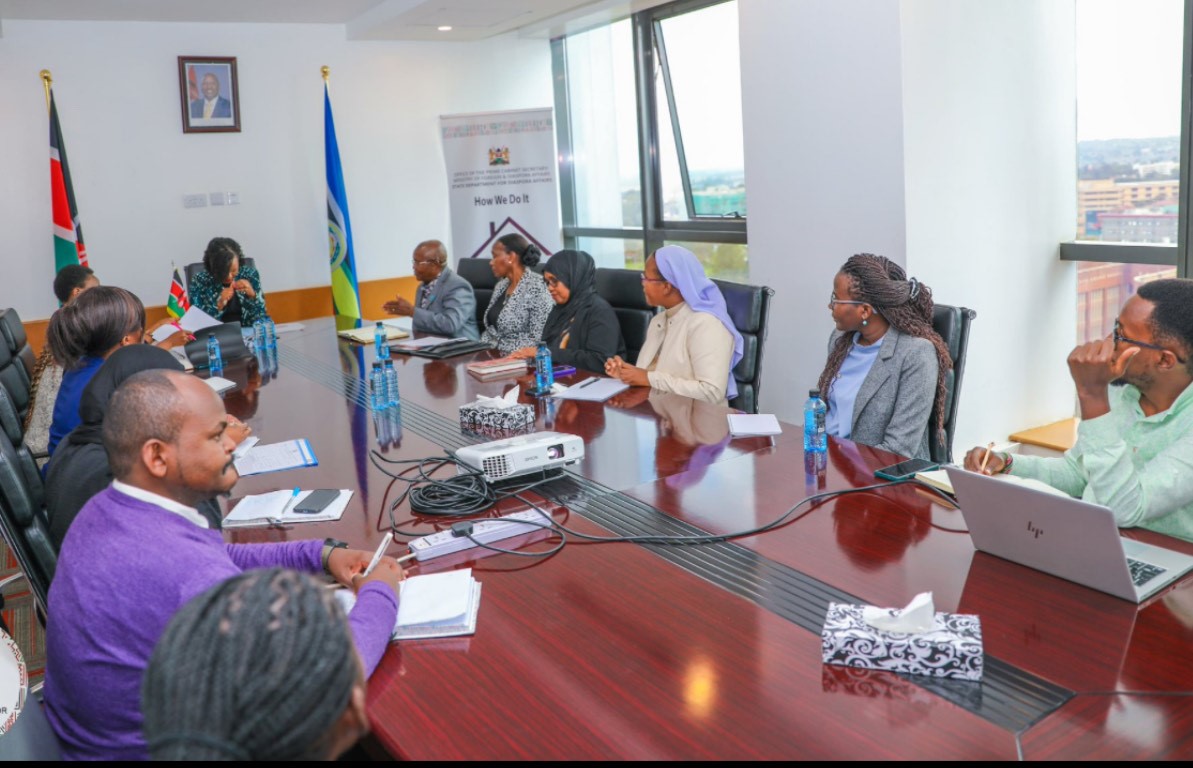
Above: NAHUSOM delegation led by Mutuku Nguli (CHTEA) during a meeting with the Principal Secretary, Ministry of Foreign Affairs (Diaspora Affairs); Ms. Roselyn Njogu
World Day Against Trafficking in Persons
NAHUSOM provided comprehensive technical and community mobilization support to the Government of Kenya during the commemoration of the World Day Against Trafficking in Persons (WDATIP) held in Nakuru County. The support focused on strengthening prevention, protection, and multi-sectoral coordination efforts in line with national anti-trafficking priorities.
Specifically, NAHUSOM supported the government through:
- Technical participation in planning and coordination meetings led by county and national stakeholders, including representatives from the Ministry of Labour and Social Protection, Directorate of Criminal Investigations (DCI), and county administration.
- Community mobilization and sensitization, engaging local communities, youth groups, and grassroots leaders to raise awareness on human trafficking indicators, reporting mechanisms, and available survivor support services.
- Information dissemination, including distribution of IEC materials on safe migration, trafficking risks, and referral pathways.
- Stakeholder engagement, fostering collaboration between civil society organizations, government agencies, faith-based institutions, and community leaders to strengthen local anti-trafficking networks.
Through this support, NAHUSOM contributed to increased public awareness on human trafficking, improved coordination among duty bearers, and reinforced the government’s efforts to promote prevention, protection, and prosecution in line with the Counter-Trafficking in Persons Act.
16 Days of Activism Against Gender-Based Violence
During the 16 Days of Activism Against Gender-Based Violence (25 November – 10 December 2025), NAHUSOM, in collaboration with its member organizations, implemented a series of advocacy, prevention, and protection activities aimed at addressing gender-based violence (GBV) and its links to human trafficking and exploitation.
Key activities undertaken included:
- Community awareness forums conducted in targeted communities, reaching women, men, youth, and community leaders with messages on GBV prevention, survivor rights, and access to justice.
- Digital advocacy campaigns, utilizing social media platforms to amplify national and global advocacy messages, promote zero tolerance to GBV, and disseminate information on reporting and support services.
- Promotion of survivor-centered protection services, including referrals to medical, psychosocial, legal, and shelter services for survivors of GBV and trafficking.
- Strengthening referral linkages by reinforcing collaboration between community structures, civil society organizations, health facilities, law enforcement, and child protection actors.
- Engagement of youth and faith-based leaders, recognizing their critical role in influencing social norms, preventing violence, and supporting community-level accountability.
The 16 Days of Activism initiative emphasized the intersection between gender-based violence, human trafficking, and exploitation, highlighting how structural inequalities, economic vulnerability, and harmful social norms increase risks for women, girls, and marginalized groups. Through sustained advocacy and community engagement, the initiative reinforced prevention, protection, and survivor-centered response priorities while promoting collective action toward ending GBV and trafficking. This initiative emphasized the intersection between gender-based violence, trafficking, and exploitation, reinforcing prevention and protection priorities.
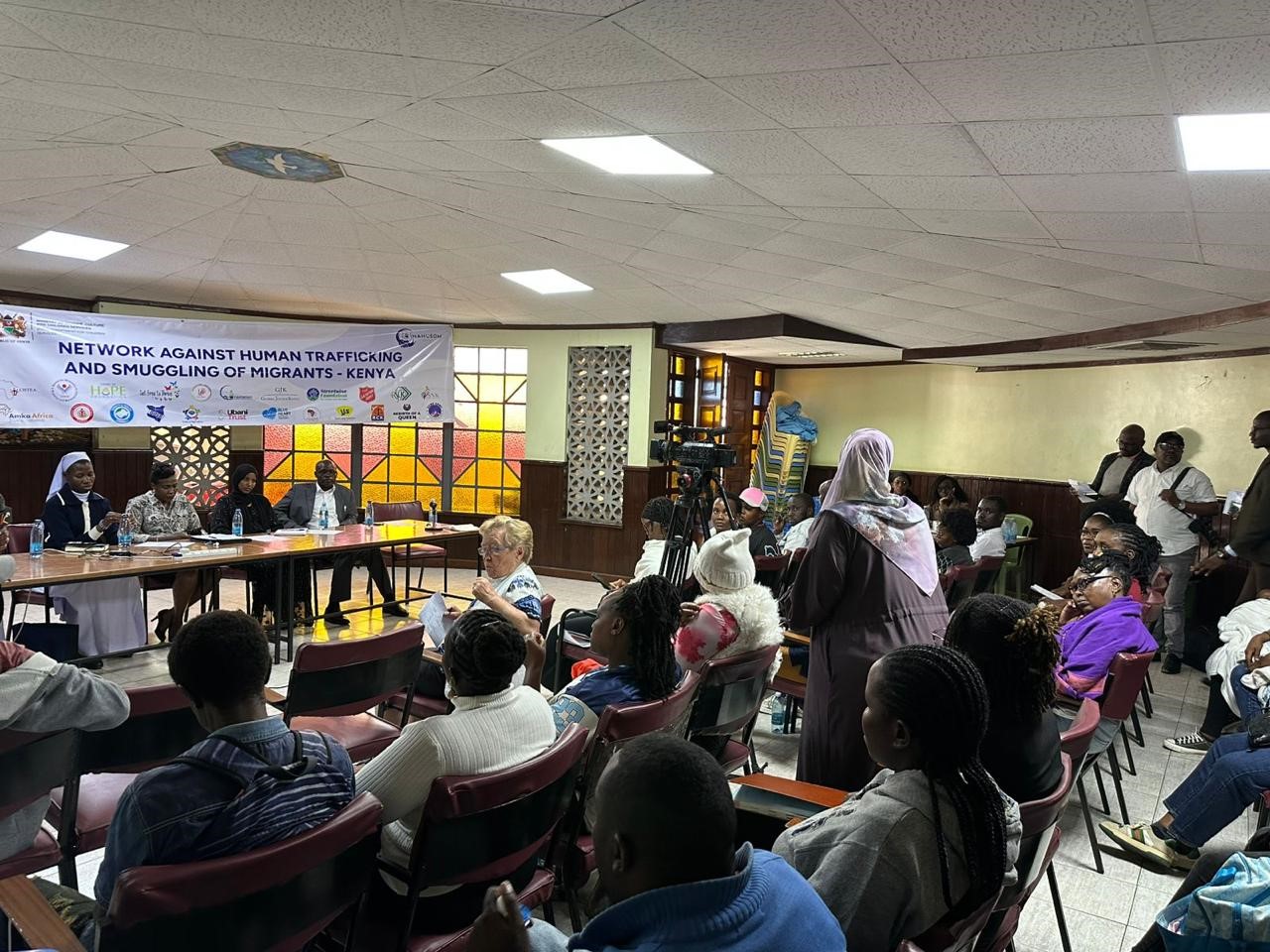
Above: NAHUSOM members and survivors marking the 16days of activism at the CHTEA head office precincts.
Prevention Through Faith-Based Engagement
Consolation EA and CHTEA conducted sensitization training for youth leaders from the Ngong Catholic Diocese, covering Narok, Kajiado, and Nairobi deaneries.
Key topics included:
- Human trafficking trends
- Victim identification
- Online recruitment scams
- Organ trafficking risks
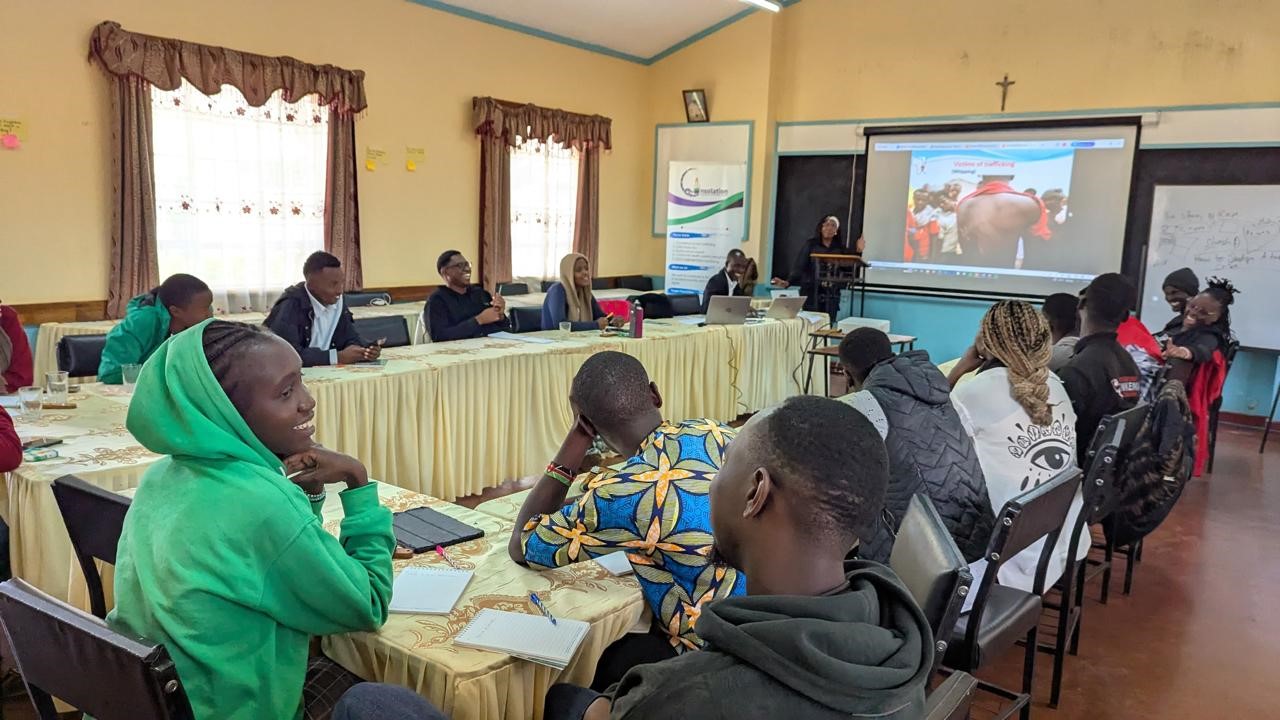
Youth leaders during faith-based sensitization training on trafficking prevention.
Strategic planning
TWG and Directors’ processes supported development of the 2026 Annual Work Plan using a practical working-session model.
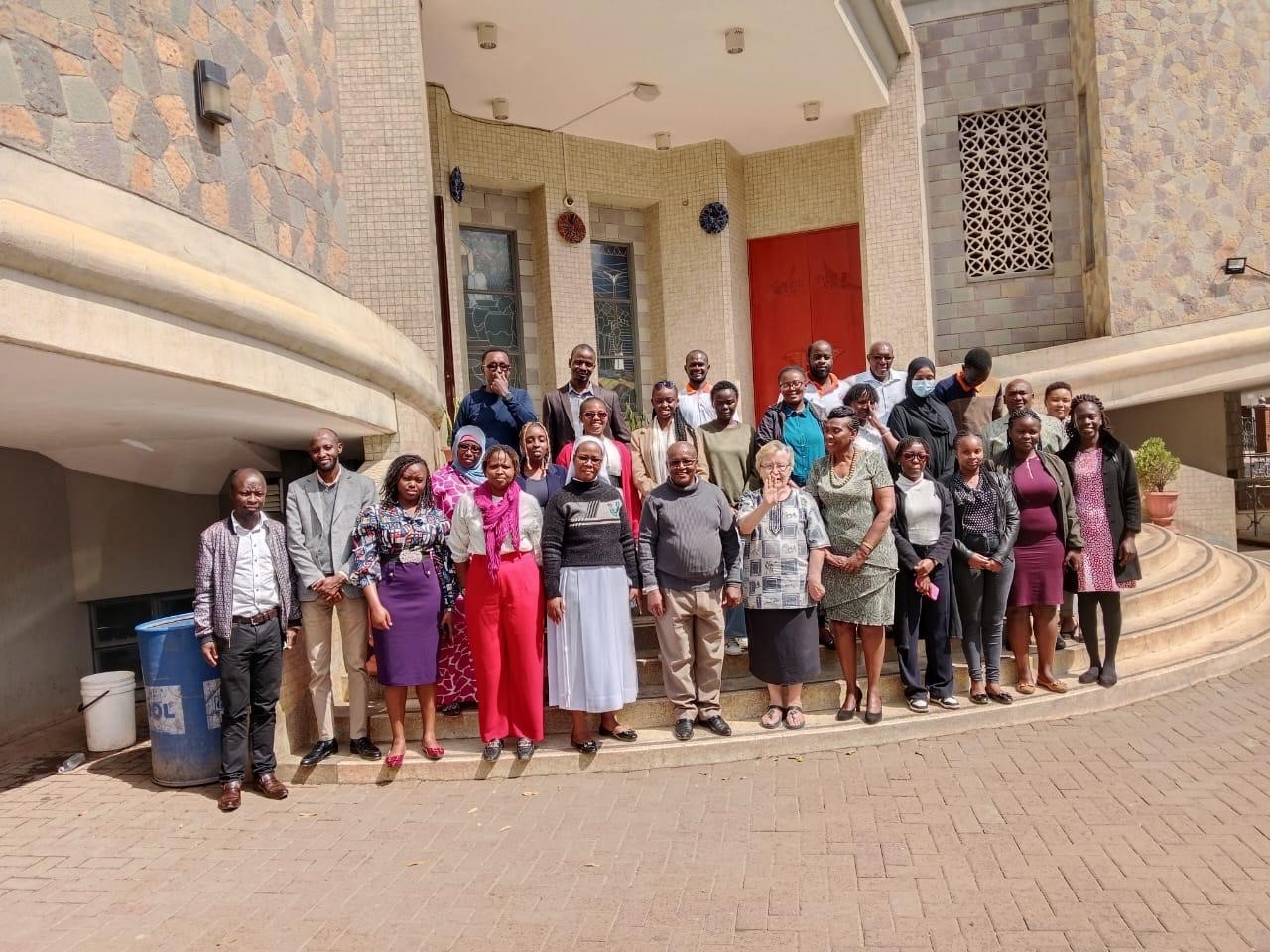
NAHUSOM members’ group photo during annual planning meeting
Engagement with the U.S. Embassy
Discussions focused on; Labor migration governance, Corruption risks, Funding gaps, Localization of responses
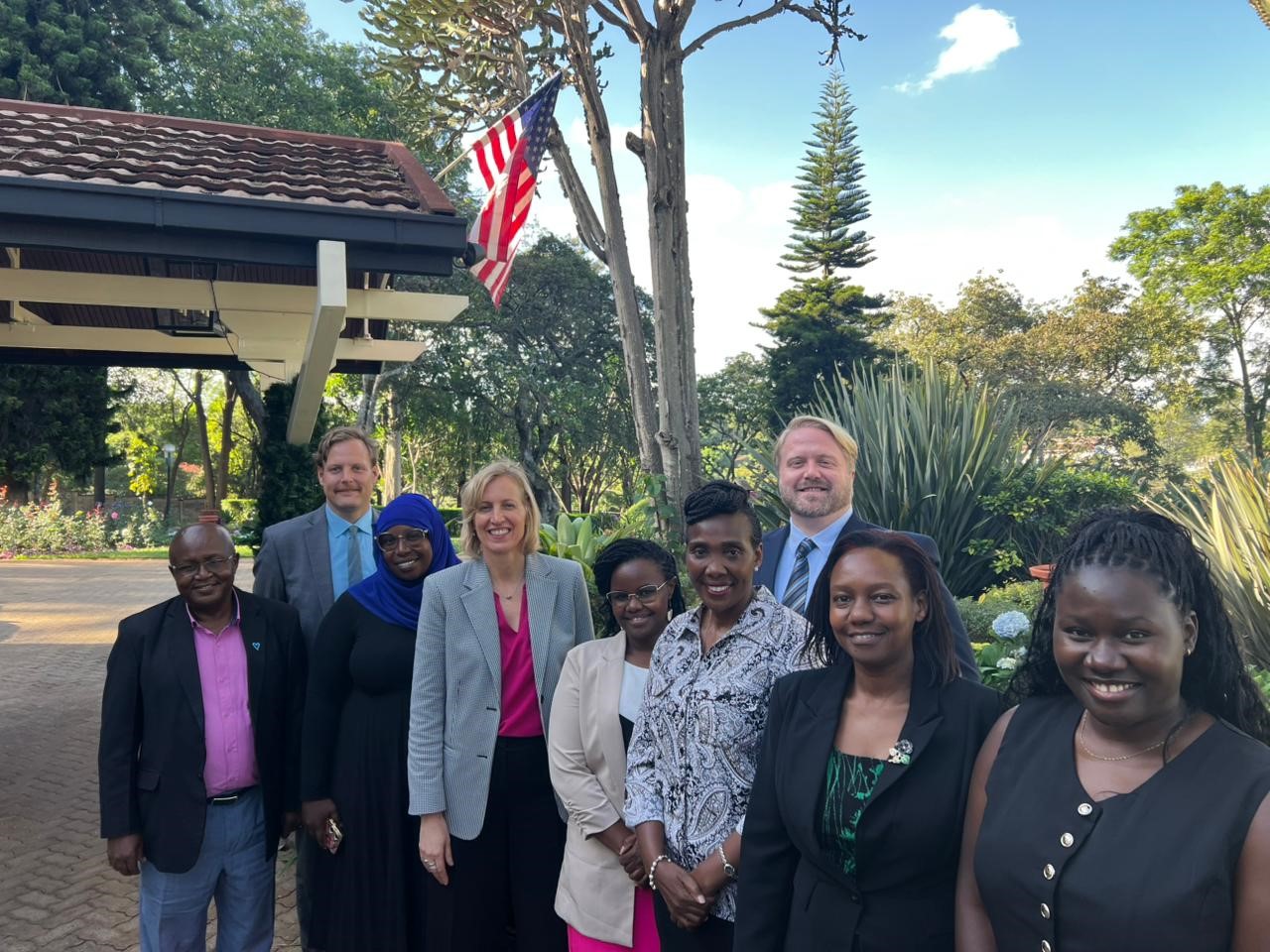
A CSO group photo with Ms. Susan M. Burns, (4th left) the Chargé d’Affaires at the U.S embassy, Nairobi.
Governance and Institutional Development
Technical Working Groups
To strengthen coordination, coherence, and strategic leadership across the network, NAHUSOM operationalized Technical Working Groups (TWGs) during the year under review. At the center of this structure is the Coordination and Strategy Technical Working Group (TWG), which serves as the lead and overarching technical body guiding all programmatic and operational work.
Coordination and Strategy Technical Working Group (Lead TWG)
This is the principal coordination and oversight mechanism within NAHUSOM. It provides strategic direction, ensures alignment with NAHUSOM’s mandate and governance framework, and oversees the effective functioning of all other TWGs. This working group generates all its mandate from what is discussed by the directors in their various meetings.
The key roles of the Coordination and Strategy TWG include:
- Providing overall strategic leadership and coordination for NAHUSOM’s technical and programmatic interventions.
- Overseeing planning, implementation, monitoring, and reporting processes across all TWGs.
- Ensuring compliance with adopted policies, governance standards, and ethical frameworks.
- Facilitating information flow and decision-making between the Secretariat, leadership, and member organizations.
- Consolidating inputs, priorities, and lessons learned from subsidiary TWGs to inform collective action and policy engagement.
2. Other Working Groups
Under the guidance and leadership of the Coordination and Strategy TWG, the following targeted working groups were fully operationalized as follows:
2.1 Communication
Responsible for communications, visibility, documentation, and knowledge management. This working group plays a crucial role in ensuring that NAHUSOM’s work, mission, and achievements are effectively communicated to diverse audiences. It manages internal and external communications including media relations, digital storytelling, publication of reports, and coordination of public information campaigns. Additionally, emphasis is placed on enhancing the use of social and digital media platforms to raise awareness about human trafficking, promote preventive measures, and amplify survivor voices. The group also documents key activities and lessons learned to strengthen institutional knowledge and share best practices within the network.
2.2 Advocacy
Responsible for coordinated advocacy, policy engagement, and campaign implementation. This working group leads NAHUSOM’s advocacy agenda by engaging with key policymakers, legislators, and development partners to promote evidence-based policies and legislative reforms related to human trafficking and migrant smuggling. It also spearheads national and county-level advocacy campaigns, aligning them with international commitments such as the Palermo Protocol and Sustainable Development Goals (SDGs). Through targeted campaigns, policy briefs, and coalition-building, the Advocacy TWG ensures that survivor protection, prosecution of traffickers, and prevention strategies remain national priorities.
2.3 Partnerships
Responsible for stakeholder engagement, strategic partnerships, and resource mobilization. This group plays a pivotal role in strengthening collaboration with government agencies, civil society organizations, international partners, and private sector actors involved in counter-trafficking. It focuses on developing joint initiatives, enhancing funding opportunities, and ensuring sustainability of interventions. The Partnerships TWG also facilitates coordination with regional and global networks, encouraging cross-border cooperation, knowledge sharing, and collective action against trafficking in persons.
The establishment of the Coordination and Strategy TWG significantly strengthened internal coordination, reduced duplication of efforts, enhanced accountability, and ensured a unified and strategic approach to NAHUSOM’s work at national and county levels.
NAHUSOM Membership
During the year under review, NAHUSOM strengthened its governance and institutional framework by adopting and operationalizing five key policy documents aimed at promoting accountability, transparency, ethical conduct, and effective risk management across the network and its member organizations.
The network has various policies e.g. whistle blowing policy, anti-corruption and bribery policy, complaints and procedures policy, risk and conflict management policy, data protection policy,
Membership Compliance
Joining NAHUSOM is conditional upon formal endorsement and signing of all five key policy documents, in addition to payment of the prescribed membership fee. This requirement ensures that all member organizations adhere to common governance standards, ethical principles, and accountability frameworks, thereby strengthening institutional coherence across the network.
]]>Deprecated: Automatic conversion of false to array is deprecated in /var/www/aec477ff-3a83-4db7-bd97-c9622c0d252a/public_html/wp-content/plugins/tt-plugin/inc/post-likes/zilla-likes.php on line 211
Human trafficking in Kenya remains a serious, complex and evolving challenge, deeply intertwined with labour migration, economic vulnerability and systemic gaps in protection. Kenya continues to function as a source, transit and destination country for trafficking, with exploitation occurring both within the country and across international borders. Despite sustained efforts by the Government and its retention at Tier 2 in the 2025 U.S. Trafficking in Persons Report, Kenya still does not fully meet the minimum standards for eliminating trafficking. While progress has been recorded in investigations, prosecutions and convictions, persistent gaps remain in victim protection, labour migration governance and long-term reintegration. The 2025 Trafficking in Persons Report reflects a mixed trajectory. The Government investigated 42 trafficking cases in 2024, up from 22 in the previous year, and prosecuted 44 cases compared to 19 previously. Convictions rose to at least 21, with the majority relating to forced labour. These improvements reflect growing enforcement capacity, but they also point to the scale of trafficking, much of which remains hidden. Labour exploitation continues to dominate Kenya’s trafficking landscape, affecting both adults and children across multiple sectors.
Kenya’s trafficking challenge cannot be separated from its current economic realities. While official unemployment rates remain relatively low, they mask a deeper crisis of underemployment and poor-quality jobs, particularly among young people. The majority of Kenyans—over 80 percent—work in the informal economy, where incomes are unstable and social protection is minimal. Increasing taxation and a difficult business environment have placed additional strain on small enterprises, which form the backbone of this sector, limiting their ability to create and sustain jobs. As livelihoods become more precarious, frustration and economic pressure are growing, especially among the youth. This has led to a sense of apathy and urgency to seek opportunities elsewhere, making labour migration an increasingly attractive option, even when the risks are known. In this context, economic vulnerability is directly feeding into unsafe migration pathways and heightening exposure to human trafficking. Labour migration has therefore become both an economic necessity and a major vulnerability pathway. Thousands of Kenyans migrate annually in search of employment, particularly to the Middle East and Gulf States. While migration offers opportunities for income generation, it also exposes workers—especially women in domestic and care work—to high levels of exploitation.
Reports of contract substitution, confiscation of passports, unpaid wages, excessive working hours and abuse remain widespread. The 2025 TIP Report notes that more than 200,000 Kenyans are working in Saudi Arabia alone, and at least 274 Kenyan migrant workers have died there over the past five years. These figures highlight the human cost of weak migration governance and insufficient protection systems. At the same time, Kenya has adopted an ambitious labour migration agenda, positioning labour export as a key economic strategy. Remittances from Kenyans abroad have grown significantly and have now overtaken traditional foreign exchange earners such as coffee, tea and tourism. However, this expansion has not been matched with adequate investment in governance, regulation and protection systems. The labour migration programme appears insufficiently prepared for its scale, with gaps in oversight of recruitment agencies, weak enforcement, and limited investment in pre-departure preparation, consular protection, labour attaches, shelter and post-return support. As a result, the rapid expansion of labour migration is outpacing the systems designed to protect workers, thereby increasing exposure to trafficking and exploitation.
Emerging trafficking patterns further illustrate the changing nature of the threat. Unlike in the past where traffickers targeted those with little education or lacking formal employment skills, Incidences of well educated young men falling prey to traffickers are on the increase. Organized criminals and traffickers are increasingly using digital platforms and social media to recruit victims into fraudulent job opportunities abroad. A growing number of Kenyans have been trafficked to Southeast Asia, particularly through Thailand into Myanmar, where they are forced into online scam operations under conditions of confinement, coercion and violence. In addition, there are deeply concerning reports of Kenyans being recruited through deceptive means to participate in the Russia–Ukraine conflict, with some losing their lives on the frontlines. These developments point to new forms of trafficking involving forced criminality and exposure to armed conflict, requiring urgent attention within national policy and legal frameworks.
Kenya has established a strong legal foundation through the Counter-Trafficking in Persons Act, which criminalizes all forms of trafficking and provides for prevention, protection and prosecution. The law includes provisions for victim assistance, coordination mechanisms and penalties for offenders, and recognizes the importance of pre-departure orientation for migrant workers through the National Industrial Training Authority and regulation of private recruitment agencies through the National Employment Authority. In addition, there is a labour migration management policy and a Victim’s Assistance Trust Fund in place. Two mechanisms of support i.e the Counter Trafficking in Persons Secretariat and its Advisory Board exist as well as the new Directorate of Labour Migration working under the Ministry of Labour and Social Protection. However, the gap between policy and implementation remains significant, and is made worse by systemic poor labour migration governance, corruption, impunity and a pending bill on Labour Migration Management that may never see the light of day given the time it has taken. One of the most critical and insufficiently addressed challenges is the situation of returnees, including victims of trafficking. Many individuals who return to Kenya—whether rescued, deported or having escaped exploitation—face profound challenges in reintegrating into society. Structured reception and reintegration systems are extremely limited, and the majority of services are provided by poorly resourced civil society organizations.
The Victims Assistance Trust Fund remains underfunded and unable to effectively support service providers, leaving survivors without adequate care. Many returnees therefore return to communities without livelihoods, support systems or pathways for recovery. The psychosocial impact on returnees is increasingly evident and poses a potential national concern. Many survivors experience trauma, anxiety, depression and other mental health challenges, often without access to appropriate care. Without structured intervention, these challenges can deepen into a wider social and public health issue. At the same time, returnees from environments such as scam compounds may have been exposed to coercive criminal practices over extended periods. Some may return with harmful skills and coping mechanisms that, if not addressed through rehabilitation and reintegration programmes, could pose risks both to themselves and to their communities. These realities highlight a major gap in current responses. There is little structured effort to rehabilitate returnees, support them to unlearn harmful exposure, and reintegrate them safely into society. The absence of such support increases the risk of re-trafficking, continued exploitation, or the transfer of harmful practices into local environments.
Social reintegration is further complicated by stigma and shame. Many survivors return to communities where they are misunderstood or judged, particularly women and girls who have experienced abuse. Without deliberate efforts to support acceptance and reintegration, survivors remain isolated and vulnerable. At the same time, survivors themselves are increasingly organizing and forming groups to advocate for their rights. These survivor-led initiatives represent an important shift in the response to trafficking, bringing lived experience into advocacy and policy spaces. However, they remain under-resourced and require sustained support from government, donors and partners. Civil society organizations continue to play a central role in Kenya’s response, often filling critical gaps in service delivery and advocacy. Networks such as the Network Against Human Trafficking and Smuggling of Migrants (NAHUSOM), which brings together approximately 25 member organizations, provide important platforms for coordination and collective action. These networks are essential in ensuring that responses remain grounded in survivor realities and in strengthening collaboration across sectors.
The ongoing public participation process in the review of the Counter-Trafficking in Persons Act presents a critical opportunity to strengthen Kenya’s response. It offers a platform to address both structural and emerging challenges, including economic vulnerability, labour migration governance, cyber-enabled trafficking, forced participation in armed conflict, and the urgent need for comprehensive reintegration systems. At the same time, Kenya is poised to ratify two key ILO conventions i.e C189 & C190 to further ensure decent work for domestic workers and fight violence and harassment at the workplace.
In conclusion, human trafficking in Kenya cannot be understood in isolation from the broader economic context. High levels of informal employment, limited decent work opportunities, and increasing economic pressure are driving labour migration and, in turn, heightening vulnerability to trafficking. Addressing this challenge will require a more comprehensive and well-resourced approach that goes beyond enforcement to tackle root causes, strengthen protection systems, and ensure that survivors are supported not only to return, but to rebuild their lives with dignity, safety and opportunity.
]]>
]]>
Deprecated: Automatic conversion of false to array is deprecated in /var/www/aec477ff-3a83-4db7-bd97-c9622c0d252a/public_html/wp-content/plugins/tt-plugin/inc/post-likes/zilla-likes.php on line 211
Deprecated: Automatic conversion of false to array is deprecated in /var/www/aec477ff-3a83-4db7-bd97-c9622c0d252a/public_html/wp-content/plugins/tt-plugin/inc/post-likes/zilla-likes.php on line 211

IOM and Government of Kenya have launched a Joint Operations Centre at the Lunga Lunga OSBP which serves over 2,500 people each day. Photo: IOM Kenya/ Moses Otunga
Kwale, Kenya – In a groundbreaking move to bolster national security and facilitate trade, the Government of Kenya has launched a Joint Operations Centre at the Lunga Lunga One-Stop Border Post in Kwale County bordering Kenya-Tanzania.
The Joint Operation Centre (JOC) unit acts as a central point for gathering, researching, compiling, and sharing information, aimed at improving operations, security, and intelligence exchange at ports of entry and exit.
IOM supports the Government of Kenya to facilitate safe, orderly, and regular cross-border mobility and trade and to effectively address transnational organized crime, including trafficking in persons as well as smuggling of migrants and goods within Kenya and the Horn of Africa through Coordinated Border Management.
“The establishment of the Joint Operation Centre will significantly enhance the effectiveness of multi-agency efforts in securing our borders and improving the overall operations of the BCOCC,”Chege Macharia, Deputy Commissioner, Border Control & Enforcement, Kenya Revenue Authority.
The Lunga Lunga OSBP serves over 2,500 people each day, including cross-border traders, travelers, and migrants. The established JOC at Lunga Lunga will further enhance efficient movement of persons and goods by countering threats at the border and creating synergy among border control and security agencies at the OSBP.
“Through the JOC, the Government of Kenya is moving towards enhanced coordination and information sharing to counter threats and facilitating seamless movement of people and goods while ensuring border security and addressing key challenges relating to border management,” said Dimanche Sharon, IOM Kenya Chief of Mission.
This initiative, funded by Global Affairs Canada, supports the Border Control and Operations Coordination Committee 5-year Strategic Plan and IOM’s strategic vision of facilitating pathways for regular migration of prioritizing whole-of-government, whole-of-society approaches to safely connect people, goods, services, knowledge, and innovation.
IOM will continue working with the Ministry of Interior through, State Department for Internal Security and National Administration that brings together all agencies with a border mandate in its efforts in spearheading inter-agency cooperation on border management, enhancing skills of frontline border officials, essential infrastructure, and advanced IT solutions, as well as offer expert technical guidance.
For more information, please contact Cynthia Meru at IOM Kenya, Email: cmeru@iom.int
Deprecated: Automatic conversion of false to array is deprecated in /var/www/aec477ff-3a83-4db7-bd97-c9622c0d252a/public_html/wp-content/plugins/tt-plugin/inc/post-likes/zilla-likes.php on line 211
Deprecated: Automatic conversion of false to array is deprecated in /var/www/aec477ff-3a83-4db7-bd97-c9622c0d252a/public_html/wp-content/plugins/tt-plugin/inc/post-likes/zilla-likes.php on line 211
The Heads (CEO’s, Executive Directors, Coordinators, Team Leaders, e.t.c.) of National Civil Society organizations of Kenya who’s focus is on countering Human Trafficking, irregular Migration, Labour Exploitation, Forced Marriages/FGM and allied dynamics met on 13th September 2024 at the Center for Domestic Training and Development (CDTD), in Westlands and resolved to among other things affirm the priority to form this broad network.
During the meeting, the heads resolved to:
- Limit NAHUSOM to National/local CSO’s in order to create a facilitative environment where a genuine platform for proper advocacy and programming gets most attention.
- Register for membership as well as pay a minimum annual fee of Ksh 10,000 (USD$100)
- Launch NAHUSOM at a breakfast at a date to be determined by a task force team
- Domicile the network’s secretariat at CHTEA and provide the requisite infrastructure for operations (tailor-made bank account, secretariat lead, communication infrastructure, etc)
- Establish a technical team to support the secretariat with technical input. To be headed by CDTD.
The essence of this network is to leverage on a consortium approach to programming and fundraising as well as a mechanism to engage with the Government of Kenya, the UN agencies, International organizations, regional, continental and global initiatives as well as donor agencies. The network envisages the use of consortium methodology in resourcing so as to maximize on scale.

Above: A group photo of the meeting of the Heads of Organizations during the NAHUSOM meeting at CDTD on 13th September 2024
Deprecated: Automatic conversion of false to array is deprecated in /var/www/aec477ff-3a83-4db7-bd97-c9622c0d252a/public_html/wp-content/plugins/tt-plugin/inc/post-likes/zilla-likes.php on line 211
Deprecated: Automatic conversion of false to array is deprecated in /var/www/aec477ff-3a83-4db7-bd97-c9622c0d252a/public_html/wp-content/plugins/tt-plugin/inc/post-likes/zilla-likes.php on line 211
Deprecated: Automatic conversion of false to array is deprecated in /var/www/aec477ff-3a83-4db7-bd97-c9622c0d252a/public_html/wp-content/plugins/tt-plugin/inc/post-likes/zilla-likes.php on line 211
During the validation of the Network Against Human Trafficking and Smuggling of Migrants (NAHUSOM) on 16th August 2024 at the CHTEA offices, a new heroine was celebrated in the most special of way.
Edith Murogo, the Executive Director and Founder of the Center for Domestic Training and Development was recently honored with the prestigious 2024 Trafficking in Persons Report Hero Award by the U.S. Department of State in Washington, D.C, on June 24,2024. This was in recognition of her relentless effort to curb human trafficking and irregular migration, among other services in support of victims and survivors.
Edith’s story started way back in 2001 when she first set up a training unit for domestic workers in Kenya at her own residence in Nairobi. She later moved to a rented unit where the demand turn a twist as she got higher recognition to train domestic workers for foreign placement and her center got accreditation from the Government. The rest is history.
The US recognition was a testament to Edith’s unwavering dedication and the tremendous impact of her collective effort at CDTD. It was also a significant milestone not only for her organization but also for NAHUSOM where she has been nominated to be the “Goodwill Ambassador” at large. In this new role, Edith edifies the broader fight against human trafficking and the smuggling of migrants. In a show of hands and demonstration of solidarity, all NAHUSOM members present during the meeting affirmed Edith’s new status.
WE, AT CHTEA CELEBRATES EDITH MUROGO AND WISHES HER ALL THE BEST IN HER ENDEVOUR TO CHAMPION THE CAUSE OF COUNTER HUMAN TRAFFICKING AND SMUGGLING OF MIGRANTS.

Above: Edith Murogo receives her award from the US Secretary of State Antony Blinken at Washington DC
In her NAHUSOM acceptance speech, Edith reiterated that, “I am deeply grateful for your support, which has been instrumental in helping me advance my mission to create a just and peaceful world where every individual enjoys their rights and dignity”. She continued, “This award would not have been possible without the collaboration and partnership of allies like you”.

Above clip: The moment of glory and address to the world
“As I continue this vital work, I look forward to your continued support. Together, we can end human trafficking and all forms of modern slavery”, she concluded.
Deprecated: Automatic conversion of false to array is deprecated in /var/www/aec477ff-3a83-4db7-bd97-c9622c0d252a/public_html/wp-content/plugins/tt-plugin/inc/post-likes/zilla-likes.php on line 211